How to Manage First-Match Nerves in Pickleball
| January 9, 2026
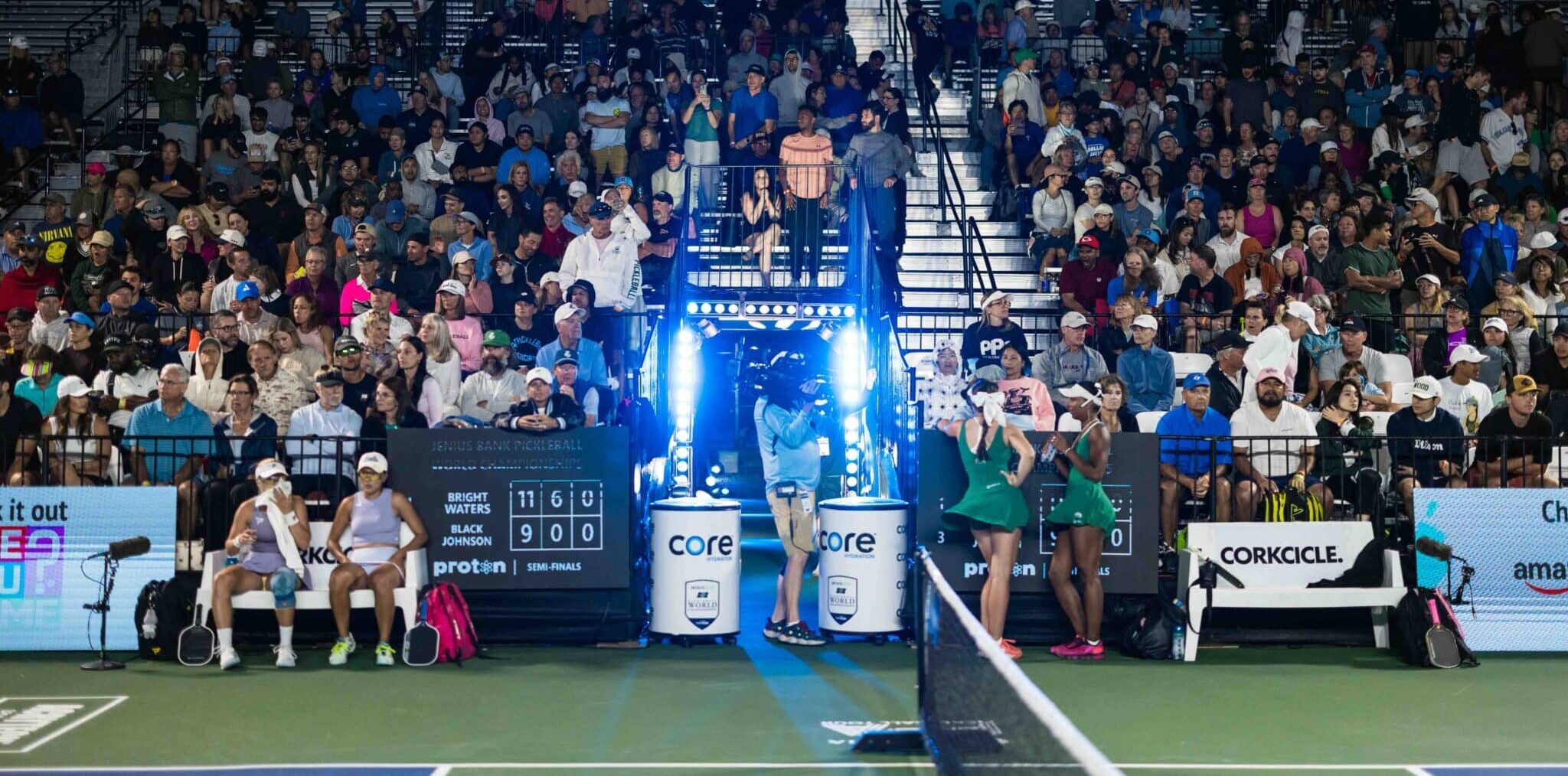
The lights. The crowd. The first match.
Whether you’re playing at your local rec center or competing in a PPA tour tournament, that first match always feels different. The heart rate rises, the hands sweat, and the mind starts racing.
Here’s the truth: first-match nerves are completely normal—even among the pros. The difference isn’t who feels nerves, but who has learned to manage them.
The good news? The mental side of pickleball is a skill, and it can be trained just like your serve or third shot.
Get There Early
One of the most effective ways to reduce that first match anxiety is simply giving yourself ample time.
Arriving early allows you to:
- Get comfortable in your surroundings
- Complete a proper warm-up
- Handle any logistics without feeling stressed and rushed
- Mentally get into competition mode
When you feel rushed, stress grows. When you feel prepared, confidence follows.
Build a Pre-Match Routine
Routine creates familiarity, which in turn, calms nerves.
Your pre-match routine doesn’t need to be elaborate. It could include stretching, controlled breathing, or bouncing the ball before serve. All that matters is consistency and familiarity.
A repeatable routine signals your brain that it’s time to compete, helping shift focus away from anxiety and into competition.
Focus on the Present, Not the Unknown Future
Trying to win the match before the first point is played is a common mental trap.
Instead of focusing on the score or outcome, narrow your attention:
- One rally
- One shot
- One choice at a time
Stay present. Momentum is built point by point, not by worrying about what you don’t know yet.
Accept the Nerves Instead of Fighting Them
Nervous energy is not the problem—it’s information.
Feeling nervous means you care about what you are doing, and that energy can be used to heighten focus. The key is not trying to eliminate nerves, but learning to use them to improve your game.
When you stop resisting the feeling, it loses control—and your performance steadies.
Talk It Out With Someone You Trust
Pickleball’s social nature can be a powerful mental advantage.
Sharing your nerves with a partner, teammate, or friend often takes the edge off immediately. Saying it out loud normalizes the experience and reminds you that nerves are part of competition—not a sign of weakness.
Train Your Mind Like You Train Your Game
The biggest difference between confident competitors and anxious ones isn’t talent—it’s preparation.
Mental skills improve with practice:
- Repeating routines
- Managing positive self-talk
- Learning how your body responds to the anxiety
Pro players also emphasize positive self-talk and mindset; this article on Pickleball.com shows how Anna Leigh Waters strengthens her mental game. Just like any technical skill in the game of pickleball, the mental game also improves over time.
First-match nerves don’t mean you’re unprepared—they mean you care about what you are doing.
With the right mindset, structure, and self-awareness, nerves can shift from a distraction into a source of focus. No matter where you play, learning to manage those first-match nerves is one of the most valuable skills a pickleball player of any level can develop.